
This guide helps you choose the right vending machines for profit, convenience, or amenities. Purchasing a vending machine today means deciding on touchscreens, elevator systems, guaranteed vend sensors, and mobile payment options. Most sellers let you configure options, arrange delivery, and add management software before checkout.
See Details About Buy Vending Machine Online
We’ve built this page as a buyer’s guide. It breaks down type, placement, payment options, remote monitoring, and service plans so you measure fit against your goals instead of focusing on the lowest sticker price.
Expect today’s baseline: cashless payments, dependable delivery systems, and remote performance tracking that improve the customer experience and encourage repeat purchases. Reliable sellers combine equipment with training, lifetime technical support, and clearly stated warranty terms.
New machines typically include at least a one-year parts warranty, while refurbished units usually carry a three-month parts warranty. A 14-day return window applies, but vandalism remains excluded from coverage.
Key Takeaways
- Understand the features and the true total cost before purchasing.
- Prioritize cashless payments and remote monitoring.
- Compare warranties, return windows, and support.
- Match the machine type to the location and customer needs.
- First-time buyers and route operators both benefit from training and lifetime help.
How To Choose The Right Vending Machine For Your Goals In Today’s Automated Retail Market
Choosing the right machine starts with a clear goal: maximize sales, improve convenience, or add onsite services. Decide what success looks like for each location before choosing features or building your product mix.
Business Vs. Home Use: Practical Setup Differences
For business use, expect commercial-grade durability, paid pricing strategies, and a higher-capacity product mix that targets repeat buyers. Offices commonly favor cashless payments and telemetry to make restocking easier.
At home, owners often choose simpler setups. Many request a “free spin” configuration at the warehouse so the unit dispenses without payment. That option preserves convenience while keeping the ability to return to paid mode later.
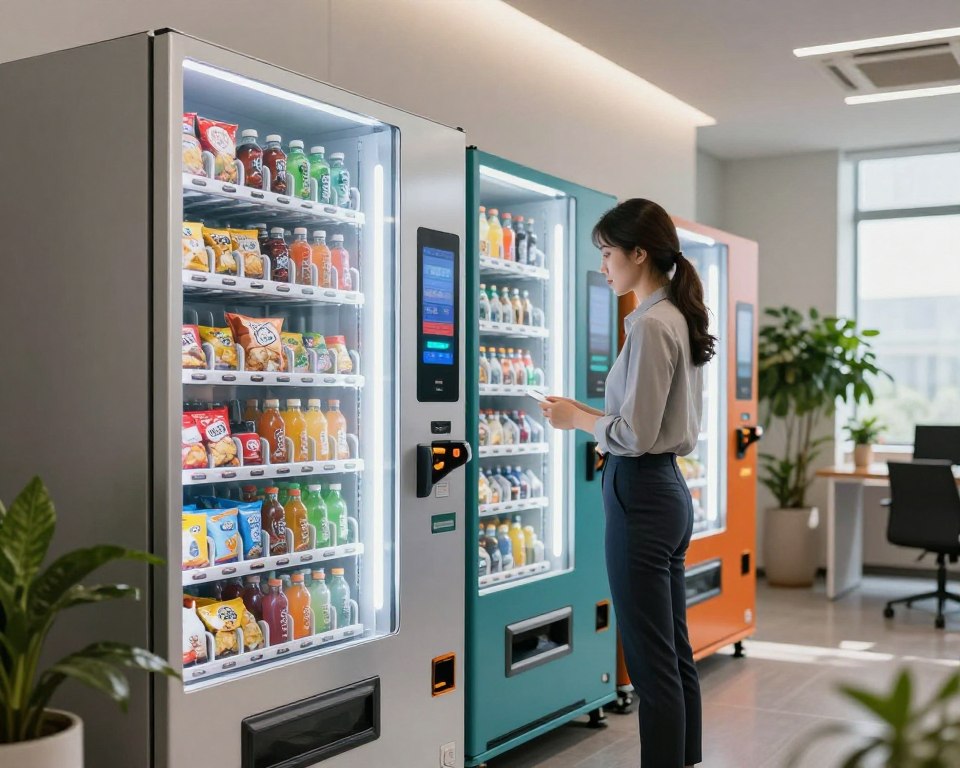
Where Demand Is Growing
Corporate offices are growing opportunities as teams return on-site. Employers add amenities that save time and support productivity.
High-density residential properties are also showing strong demand. Apartments and condos often want 24/7 access to snacks, drinks, chargers, and basic essentials without a trip to the store.
What Automated Retail Means Now
- Wider product variety beyond snacks and drinks.
- Faster self-serve convenience powered by modern payment technology.
- More efficient operations through telemetry and remote inventory tools.
The right selection fits your service capability, customer needs, and the experience you want. The next sections link types to product fit, highlight features to compare, and cover pricing plus long-term support.
Vending Machine Types And Best-Fit Product Categories
Identify the items you plan to sell, then choose a class of equipment built to deliver those products reliably.
Snack Units For Workplaces And Shared Spaces
Snack vending machines excel in offices, schools, and co-working areas. They depend on accurate planograms and proper coil setup for consistent vending.
Use durable coil spacing and clear product labels to reduce jams and returns.
Drink And Soda Units For High-Traffic Spots
Drink vending and soda machines fit transit hubs, gyms, and cafeterias. High cold capacity and quick restock cycles keep sales consistent.
Choose models with strong refrigeration and easy-loading shelves.
Combo And Flexible Options
- Combo snack drink units save floor space in lobbies and small shops.
- They balance variety with simpler service compared to two separate machines.
Bulk Formats And A Key Wheel Detail
Bulk machines come as single-, double-, or three-head units and racks for candy, gumballs, and toy capsules.
Note: a gumball wheel can vend 1-inch toy capsules and 27mm bouncy balls, but capsules won’t work in a candy wheel—choose the proper wheel at order time.
Specialty Options
Crane/claw machines, sticker units, tattoo units, and custom builds fit entertainment venues and family-focused traffic. These options drive impulse buys and brand engagement.
Align the type with your product mix, restocking capacity, and customer experience. Next, compare payment, vend reliability, and management tools by class.
Buy Vending Machine Online: Must-Have Features To Compare Before You Purchase
Prioritize payment, telemetry, and delivery features that protect revenue and build customer trust.
Cashless Payments And Card Acceptance
Credit card acceptance is table stakes now. Look for Apple Pay and Google Wallet compatibility plus chip readers for secure transactions.
Confirm the terminal supports contactless tap, NFC wallets, and EMV chip processing to reduce declines and speed checkout.
Remote Inventory Tracking And Management Software
Management software should display inventory by item, sales by SKU, and cash vs. credit transactions.
Telemetry alerts for low stock, connectivity loss, or door-ajar warnings reduce downtime and unnecessary service calls.
Guaranteed Vend Sensors And Delivery Reliability
Guaranteed vend sensors reduce refunds and complaints. Elevator or soft-drop delivery protects fragile products and increases customer satisfaction.
Branding And Service As Part Of The Feature Set
Custom wraps turn equipment into a marketing surface that matches offices, gyms, or lobbies.
Finally, compare implementation details and the setup, training, and ongoing support the seller includes. Higher reliability and clearer sales visibility reduce service costs and help retain customers.
Vending Machine Prices, Total Cost, And What You Can Expect To Pay
Expect a broad price range for automated retail equipment, driven by condition, features, and payment options.
Used And Refurbished Ranges
Used units typically list around $3,000 to $4,000 in the U.S. market. Refurbished should mean tested electronics, cleaned refrigeration, replaced belts or coils, and a clearly stated 3-month parts warranty.
New Unit Pricing And Included Tech
New equipment typically runs $4,500–$6,500. That price often includes remote inventory monitoring, management software, cashless payment support, and guaranteed vend systems plus a one-year parts warranty.
Custom Builds And When They Make Sense
Custom machines generally range from roughly $6,500 to $13,000 for OMNI-style projects. Choose custom when product size, branding, or special dispensing mechanics require non-standard designs.
Payment Hardware And Add-On Costs
Plan for card readers to add several hundred dollars. For example, Nayax VPOS Touch MDB unit pricing shows discounts from roughly $399 down to $289 at higher volumes.
| Condition | Typical price | Key inclusions |
|---|---|---|
| Used/Refurbished | $3,000–$4,000 | Tested components, 3-month parts warranty |
| New | $4,500–$6,500 | Telemetry, cashless, guaranteed vend, 1-year warranty |
| Custom | $6,500–$13,000 | Branding, unique layouts, volume discounts |
Total Cost Considerations
Beyond the unit price, budget for inventory stocking, delivery and placement fees, parts, and ongoing service. Financing can smooth monthly cash flow for operators scaling multiple machines.
Price-to-value matters: higher upfront costs can pay off if they cut downtime, improve payment conversion, and keep snack and drink sales consistent.
Service, Warranty, And Technical Support That Protect Your Investment
A strong service plan keeps downtime low and revenue consistent for any automated retail setup.
Why service terms matter: fast support and clear warranty language reduce lost sales and lower the daily workload for a vending machine business owner.
Warranty Expectations By Condition
New equipment usually includes a one-year parts warranty. Refurbished or used units commonly include a shorter, three-month parts warranty even when fully tested.
Confirm what the warranty covers and whether labor or shipping is included before you commit.
Lifetime Technical Support And Training Options
Look for lifetime expert technical support with immediate access to a real team. Good technical support offers phone help and video calls (Zoom/FaceTime/Skype). In-person training should be offered as an option where available.
Parts Availability And Maintenance Planning
A large inventory of common parts speeds repairs and keeps customer locations running. Waiting weeks for components can wipe out profit and hurt customer trust.
Use a basic maintenance plan: cleaning schedules, payment reader checks, coil/elevator tests, and daily telemetry reviews to protect uptime.
Returns And Exclusions To Confirm
Confirm the return window and exclusions before checkout. Typical terms include a 14-day return policy while vandalism and misuse are excluded from warranty coverage.
| Item | Typical term | Why it matters |
|---|---|---|
| New warranty | 1 year parts | Higher quality assurance and longer protection |
| Refurbished warranty | 3 months parts | Lower cost but shorter coverage period |
| Technical support | Lifetime, immediate access | Reduces downtime and helps troubleshooting |
| Return window | 14 days | Allows testing at location; confirms fit for use |
Strong support, clear warranty terms, and ready parts inventory give buyers confidence to finance and scale a business. These factors matter as much as specs when selecting equipment for day-to-day use.
Conclusion
Wrap up your decision by weighing how each model fits your site, budget, and ongoing support options.
Start with your goals and location, then choose the right type: snack machines for breakrooms, drink and soda models for high traffic, and combo or bulk where space or variety matters.
Factor total price, not just sticker cost — include payment hardware, stocking, placement, and maintenance so sales projections stay realistic.
Focus on reliability features such as guaranteed vend and elevator delivery to protect product quality and reduce refunds for snacks and bottled drinks.
Quick checklist: confirm payment options (mobile wallets), management visibility (inventory and sales reporting), and warranty/return terms before committing. Compare specific vending machines and configuration options online using this guide to choose the best fit for your business.
Related: Supervisors Go To Website About Vending Machine Services Company Plano TX