
Clearing Fence Lines Along Property Borders
Were you aware that excessive vegetation can cause property damage estimates to skyrocket as much as 20%? Maintaining fence lines around the property perimeters is not merely a visual project. It plays a key role in maintaining security, security, and aesthetic appeal for homeowners and landowners alike with land clearing services. This article delves into the importance of these services, reviewing the process and benefits of hiring a professional fence line clearing service to preserve your property’s boundaries effectively.
Critical Findings
- Clearing fence lines is essential for preventing property damage and preserving safety.
- Specialized fence line clearing services can enhance the aesthetic appeal of your property.
- Regular maintenance of fence lines can considerably reduce fire risks and security concerns.
- Understanding the clearing process can help property owners make educated decisions.
- Contracting skilled professionals ensures effective and safe fence line maintenance.
Understanding the Significance of Fence Line Clearing
Regular fence line clearing is key for your property’s safety and beauty. Neglecting this can damage your fence and jeopardize security. A unkempt fence line draws unwanted attention and encourages intruders. Engaging a reliable fence line clearing company keeps your property protected and enhanced in appearance.
Protecting Your Property from Risks
Overgrown vegetation is a major risk. Tall grass, weeds, and shrubs can ignite fires during dry seasons. This underscores the need for perimeter brush clearing. Clear fence lines allow for early detection of threats. They also discourage trespassers, enhancing security.
Enhancing Aesthetic Appeal
A tidy fence line greatly elevates your property’s look. Overgrown vegetation can lower curb appeal and property value. Regular clearing makes your property welcoming. It showcases your gardens or landscaping, making it attractive.
The Hazards of Overgrown Fence Lines
Overgrown fence lines present significant risks to both safety and property integrity. Uncontrolled vegetation growth leads to hazards, mainly concerning fire prevention and security. These issues can have serious consequences for homeowners.
Fire Risks and Safety Issues
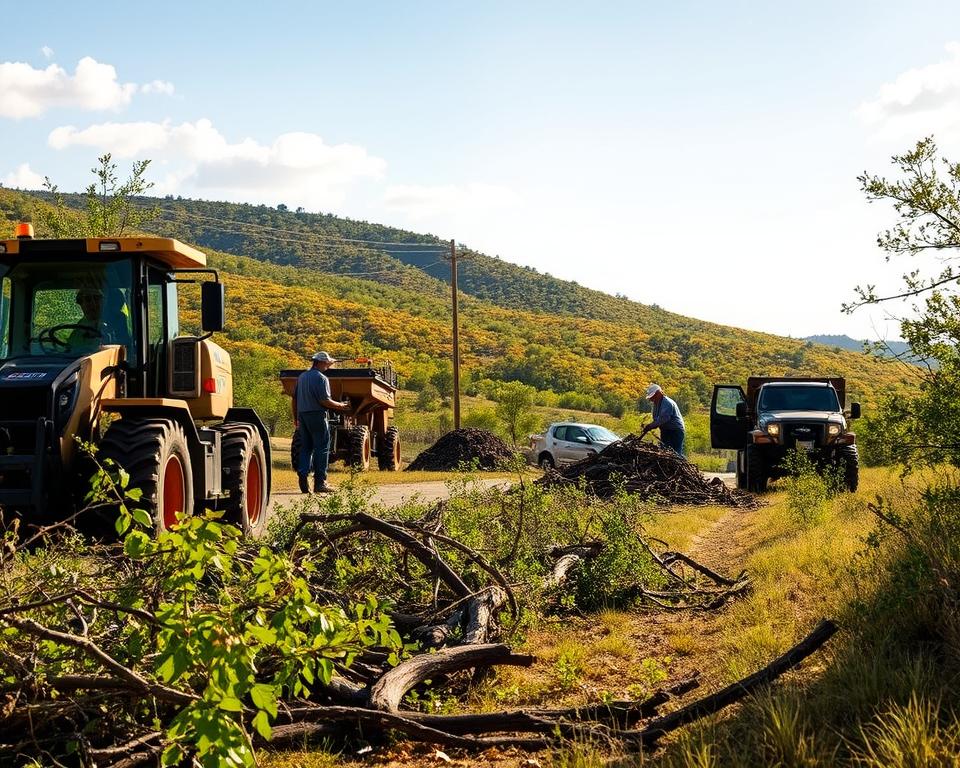
Thick vegetation along fence lines is a fire hazard. Dried brush and weeds act as fuel for wildfires, making fire prevention imperative. If a fire breaks out, emergency services may find it difficult to control it due to blocked visibility and access from overgrown foliage.
Compromised Security and Integrity of Fences
Overgrowth severely compromises security. Thick brush can hide intruders, increasing the risk of trespassing. Branches can also weaken fences, weakening their structure. To prevent these issues, regular fence line maintenance is essential, helping to maintain the integrity of your property boundaries.
What is Fence Line Clearing?
Fence line clearing is a key practice aimed at keeping a property’s perimeter clear of unwanted obstructions. It not only secures the property but also enhances its appearance. By addressing these issues, owners can safeguard their investment and ensure clear boundaries.
Defining the Process
The fence line clearing process involves removing vegetation, debris, and obstacles that infringe upon the fence area. This includes shrubs, fallen branches, and intrusive plants that obstruct visibility or damage the fence. Effective land clearing is key to maintaining clear lines and ensuring property security.
Common Obstacles Removed During Clearing
Several common obstacles are addressed during fence line clearing to improve property boundaries. These include:
- Excessive shrubs and weeds
- Decomposed trees or branches
- Loose rocks and gravel
- Fallen leaves and natural debris
- Invasive plants that threaten native species
By focusing on these areas, property boundary vegetation clearance effectively improves aesthetics while guaranteeing the fencing’s longevity and stability.
Benefits of Clearing Fence Lines Around Property Perimeters
Regular maintenance of fence lines offers numerous advantages that play a key role in property management. By engaging in perimeter fencing vegetation removal, property owners can achieve improved upkeep and visual appeal while securing their premises. The benefits extend beyond neatness, influencing both aesthetics and functional aspects of safety.
Improved Property Maintenance
Well-maintained fence lines add significantly to overall property upkeep. With perimeter fencing vegetation removal, the chance of interference from encroaching plants and branches diminishes. This preventative approach leads to lowered damage from overgrown branches affecting not just the fence but also adjacent structures.
Increased Visibility and Security
Clearing vegetation around fences enhances visibility for property owners and security personnel, allowing easier spotting of threats. This increased clarity acts as a deterrent, making it difficult for intruders to approach unnoticed. Maintaining unobstructed views promotes a sense of safety for neighbors and residents.
Enhanced Curb Appeal
A neat fence line elevates the overall attractiveness of a property. Owners looking to increase market value will find that a well-kept perimeter significantly boosts curb appeal. Regular fence line maintenance not only creates a lasting impression on visitors but can also improve neighborhood aesthetics, adding to a pleasing community environment.
Choosing the Right Fence Line Clearing Company
Choosing a fence line clearing company is a important decision for managing your property’s perimeter. Look for teams with extensive industry knowledge and the appropriate tools for your property’s unique needs. Making an educated choice can yield long-term benefits, guaranteeing your property remains organized and secure.
Look for Expertise and Equipment
When evaluating contractors, focus on their fence line clearing expertise. Companies with experience in state-of-the-art machinery can clear your property effectively and safely. They should have specialized tools for tasks like removing underbrush and trimming overgrown vegetation. Always inquire about their equipment and methods to make sure they meet modern standards.
Assessing Experience with Different Property Types
Every property type, from residential to commercial, has its own clearing needs. A reputable company will have experience with various terrains and challenges. Ask about their past projects to gauge their ability to manage your property’s specific issues. This background is vital to efficient perimeter upkeep, keeping your property secure and tidy.
Techniques for Effective Fence Line Clearing
Effective fence line clearing requires a variety of techniques. Homeowners can choose between mechanical methods and non-toxic solutions. This flexibility allows them to keep their property in top condition while protecting the environment. Understanding these methods helps in making educated decisions about fence line upkeep.
Mechanical Methods
Mechanical methods use tools such as chainsaws, bulldozers, and brush mowers to tackle dense growth. These machines efficiently clear large areas, saving time on manual labor. Some common mechanical options include:
- Chainsaws for felling trees and thick branches.
- Bulldozers for removing heavy brush and debris.
- Brush mowers for cutting through thick vegetation quickly.
While mechanical methods are powerful, they can pose ecological risks. It’s important to assess environmental impact and follow safety protocols before operating heavy machinery. This ensures responsible management.
Herbicides and Non-toxic Solutions
When mechanical methods aren’t suitable, herbicides and non-toxic solutions offer alternatives. These include chemical and organic herbicides to control persistent vegetation. Benefits of these approaches include:
- Long-term management of weeds and unwanted plants.
- Minimized physical labor.
- Potentially lower environmental impact when using non-toxic solutions.
Combining herbicides with mechanical methods provides a complete solution for fence line upkeep. A integrated approach delivers lasting results while supporting ecological health.
How Often Should You Clear Your Fence Line?
Developing a maintenance schedule for fence line clearing is vital for safety and aesthetics. Regular upkeep prevents overgrowth, keeping fence lines both operational and visually appealing. Clearing frequency depends on varied factors that require careful consideration to maintain a well-defined boundary.
Establishing a Maintenance Schedule
A structured maintenance schedule is crucial to effective fence line upkeep. Regular inspections and clearings help prevent overgrowth risks. It’s wise to adjust the timetable based on growth patterns and environmental conditions.
Factors Affecting Clearing Frequency
Several variables influence how often you should clear your fence line, including:
- Local vegetation growth rates: Different plants and trees grow at different speeds, necessitating more frequent attention in lush areas.
- Seasonal weather conditions: Heavy rains or strong winds can increase foliage debris along the fence line.
- Property usage: Homes with high foot traffic or livestock may require more regular maintenance to avoid obstructions.
Understanding these variables and setting a maintenance timetable helps property owners keep fence lines well-maintained, boosting both safety and curb appeal.
Finding a Property Boundary Vegetation Clearance Service
Selecting a reliable property boundary vegetation clearance service boosts your property’s upkeep. Professionals bring necessary knowledge and dedicated equipment to the task, ensuring excellent results and safety throughout. Opting for expert assistance conserves time and reduces accident risks compared to DIY efforts.
Benefits of Hiring Professionals vs. DIY
Employing experts for fence line maintenance offers several core advantages:
- Access to state-of-the-art machinery for efficient clearing and upkeep.
- Knowledge of local regulations and best practices for vegetation management.
- Comprehensive property assessments tailored to individual needs, ensuring ideal outcomes.
- Time-saving advantages that let you focus on other priorities.
What to Expect from a Professional Service
Partnering with experts for property boundary vegetation clearance means you can expect:
- An initial consultation to assess your property and discuss requirements.
- Detailed plans outlining the extent of work, projected timeline, and cost estimates.
- Thorough vegetation removal and cleanup, leaving fence lines clear and attractive.
- Ongoing support and advice for future maintenance to keep your boundaries well-defined.
The Role of Specialized Equipment in Fence Line Clearing
Dedicated equipment is essential for efficient fence line clearing. Various types of machinery deliver optimal results while ensuring safety. Familiarity with these tools and their safety measures can elevate property boundary maintenance.
Types of Equipment Typically Used
Equipment selection depends on project scale. Common tools include:
- Brush Cutters
- Mulchers
- Bulldozers
- Chainsaws
- Tree Removal Equipment
Each tool has a specific role, contributing to the clearing process’s speed and thoroughness. Choosing the right equipment hinges on the nature of the obstacles.
Safety Considerations When Using Heavy Machinery
Although machinery enhances productivity, safety must never be overlooked. Key safety protocols include:
- Regular maintenance inspections of equipment.
- Proper training and certification for operators.
- Use of appropriate personal protective equipment (PPE).
- Strict adherence to safety regulations and guidelines.
Following these practices reduces risks posed by heavy machinery, ensuring a responsible fence line clearing operation.
Wrapping It Up
Maintaining fence lines around property perimeters is more than aesthetic; it’s essential for home safety and boundary upkeep. Regular attention to these areas can significantly lower risks and prolong fence lifespan. A well-maintained fence line also makes outdoor spaces safer and more inviting.
Hiring experts for fence line clearing delivers many advantages. They bring the right tools and expertise to tackle various challenges. This investment improves safety, reduces risks, and creates more attractive outdoor areas. Ultimately, prioritizing this maintenance is crucial to any property’s long-term success.