
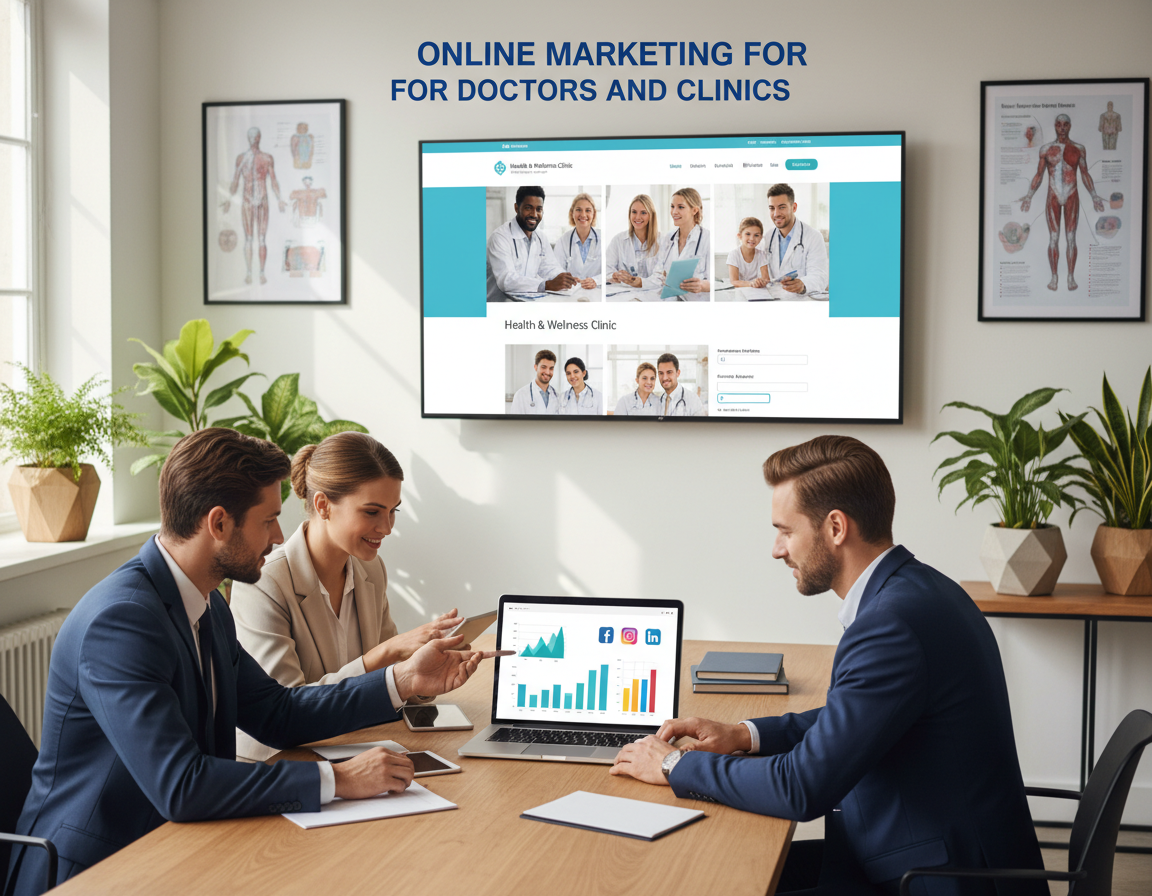
In the U.S., many medical practices have trouble with filling their appointment books, even though they have well-established clinical reputations. Online Marketing For Doctors And Clinics provides practical strategies that can actually be implemented. These strategies are designed to convert searchers into scheduled visits.
Grow Your Medical Practice Online
Strong medical marketing strategies bring together SEO, Google Ads, social media, and content marketing. They target patients who are already searching for care. Agencies like Marketing 1 On 1, Officite, and Online Marketing For Doctors build around HIPAA-aware websites, local SEO, and reputation management. This approach transforms visibility into real growth.
This is a data-led method. Targeted healthcare digital marketing helps increase patient volume while also strengthening conversion rates. It also makes return on investment easier to measure. The core promise is straightforward: combine integrated channels and a proven framework to generate more new-patient inquiries in months rather than years.
Main Takeaways
- New-patient growth often comes from integrated medical marketing strategies that use SEO, PPC, social media, and content.
- HIPAA-aware execution, local search visibility, and review management are essential in healthcare digital marketing.
- Growth can often be accelerated through packaged programs and audits from agencies such as Marketing 1 On 1 and Officite.
- Measurable tactics—search rankings, ad conversions, and appointment funnels—deliver ROI.
- Short discovery calls or site quizzes often reveal quick wins and a clear timeline for impact.
Why Digital Marketing Matters For Medical Practices
Many practices deliver excellent patient care but still face challenges in attracting new patients. Clinical skill alone is no longer sufficient to keep appointment schedules full. Online Marketing For Doctors And Clinics addresses this issue by making services visible where patients are already searching.
The Patient Acquisition Problem And Opportunity
About seventy-five percent of searchers never go past the first page of results. That makes local SEO and reputation management essential for being noticed first. By leveraging physician SEO services and targeted ads, a clinic can secure a top spot on page one, ensuring a steady flow of appointments.
Targeting the right channels can lead to fast patient growth. In competitive markets such as New York, a focused strategy can often generate strong growth within a few weeks. This rapid growth is important for clinics needing to fill appointments promptly.
Why Talent Without Visibility Still Falls Short — The Van Gogh Analogy
A skilled clinician who remains invisible online is akin to Vincent van Gogh, who sold only one painting in his lifetime. Skill matters, but exposure is what creates demand. Healthcare digital marketing allows talented physicians to be discovered and chosen by patients.
Effective campaigns blend SEO, PPC, social media, and content marketing. That synergy helps a practice’s expertise reach people who are actively looking for healthcare services.
Healthcare Marketing Trust And Regulatory Considerations
Medical advertising has to follow HIPAA requirements and healthcare marketing rules. Compliance protects patient privacy and prevents costly mistakes. When marketing respects those rules, it strengthens credibility while helping practices avoid penalties.
Patient decisions are strongly shaped by reviews and trust signals. A consistent review-generation process and thoughtful responses to negative feedback help preserve a positive reputation. When physician SEO services are paired with reputation management, online visibility is more likely to turn into real appointments.
| Common Challenge | Recommended Marketing Response | Likely Impact |
|---|---|---|
| Poor local discoverability | Local SEO, optimized Google Business Profile, physician SEO services | Higher search ranking, more discovery calls |
| Slow appointment flow | Targeted PPC and social advertising built around local demographics | Quicker patient acquisition in weeks |
| Reputation and trust concerns | Review generation, response protocols, HIPAA-aware messaging | Better conversion rates with less reputational harm |
| Unclear compliance requirements | Legally reviewed, HIPAA-conscious campaigns | Compliant, scalable growth in healthcare digital marketing |
Key Medical Marketing Strategies And Channels
A well-balanced approach to marketing is important for clinics and private practices. This approach balances immediate results with durable long-term growth. Paid ads quickly attract patients, while SEO and content marketing foster trust and lasting visibility.
SEO And Physician SEO Services
Local search results are especially important for clinics focused on specific procedures. Strong physician SEO services focus on service pages, local schema, and citation consistency in order to attract nearby patients. Monitoring rankings and organic conversions demonstrates the strategy’s effectiveness.
A smart focus includes long-tail procedure phrases and FAQs built around patient search behavior. Use structured data so search engines can better highlight hours, reviews, and services in the results. Over time, those efforts lower acquisition costs.
Healthcare PPC Campaigns And Paid Search
Healthcare PPC campaigns can generate traffic quickly when they use location targeting and compliant messaging. Call-only campaigns, local targeting, and conversion tracking should be used to measure both calls and booked appointments.
Negative keyword lists and ongoing policy awareness help prevent unnecessary ad spend. Landing pages and appointment funnels should be tested continually to improve conversion rates and reduce cost per patient.
Doctor Social Media Marketing And Social Media Strategy
Doctor social media marketing supports relationships and educates patients. Use HIPAA-safe content, secure patient consent before sharing stories, and rely on short-form video to reach broader audiences.
Platforms like Facebook, Instagram, and YouTube enable targeted ads and patient nurturing through remarketing. Educational posts and timely responses to comments help strengthen audience engagement.
Video Strategy And Content Marketing
Content marketing helps educate patients while also supporting SEO growth. Create blogs, procedure pages, FAQs, and patient journey videos to boost authority and reduce booking barriers.
Video content can increase viewer interaction on both YouTube and Google. Combine written guides with short explainer clips to guide patients from research to scheduling.
| Channel | Primary Goal | Primary Tactics | Short-run Impact |
|---|---|---|---|
| SEO Search | Organic search growth | Local schema, service pages, citations | Steady traffic growth over months |
| Paid Search | Immediate patient acquisition | Geo-targeting, call-only ads, conversion tracking | Patient volume in days to weeks |
| Social | Engagement and referrals | Educational social content, short video, and paid social campaigns | Audience growth and brand recall |
| Educational Content | Education and trust | Blogs, FAQs, procedure videos | Improved conversions with less friction |
Conversion, Website, And Reputation Tactics
The website acts as the central conversion point where clinic online advertising becomes booked visits. Begin with a discovery audit to identify gaps in layout, load times, and trust indicators. Use a simple quiz or checklist to evaluate performance and establish priorities for medical website optimization.
User Experience And Responsive HIPAA-Aware Design
A strong medical website design puts mobile usability, page speed, and accessibility first. Ensure TLS encryption, minimal PHI in public forms, and clear privacy notices. Trust can be strengthened by placing appointment CTAs above the fold and showing credentials, certifications, and accepted insurance details.
Appointment Funnels And Conversion Rate Optimization
Create service-specific landing pages with focused messaging and single-goal forms. Scheduling widgets, click-to-call buttons, and retargeting pixels should be added to recover visitors who do not book right away.
Reputation Management And Review Generation
Establish a system to request reviews after visits, using SMS or email with compliant language. Monitor review sites and reply promptly to feedback while protecting patient privacy. Verified testimonials and reputation tools can be used to highlight strong patient experiences and support trust.
Analytics And CRM Integration For ROI Tracking
Connect Google Analytics, call tracking, conversion pixels, and the practice CRM to track leads from ad click to booked visit. Tag campaigns to measure clinic online advertising performance and allocate budget to channels with the best cost per new patient.
Practical Checklist
- Complete a website audit and prioritize the most important medical website optimization fixes.
- Implement HIPAA-aware forms and secure scheduling.
- Launch targeted landing pages and appointment funnels.
- Automate review requests and build reputation management workflows.
- Integrate analytics, call tracking, and CRM for clear ROI.
How A Marketing Agency Partnership Can Scale Your Practice (Marketing 1 On 1 — SEO & Digital Marketing Agency)
Working with a medical marketing agency can greatly reduce the time a practice spends managing marketing internally. It also minimizes the risk of costly errors. These agencies offer a range of services, including SEO, online advertising, and reputation management. They also tend to offer tailored strategies, realistic timelines, and pricing structures matched to your needs.
A strong agency partner should be chosen based on clear and measurable outcomes. A credible agency will usually provide SEO, online advertising, and reputation management as part of its offering. Web redesigns, CRM integration, and analytics support should also be available. It’s essential to find an agency that understands your healthcare business’s unique requirements and compliances.
Agencies typically follow a structured approach. They start with quick wins from paid advertising, which can be seen in days. Organic SEO, by contrast, tends to follow a steadier and more predictable timeline. Throughout the process, they provide detailed audits, blueprints, and regular reports to track progress and ROI.
What You Should Expect From A Medical Marketing Agency
Thorough audits and HIPAA-aware hosting standards should be expected from a reputable agency. They will develop content strategies, focus on local SEO, and set up Google Ads. They also manage review generation, ensuring your online presence is strong and compliant.
Proven Tactics And Timelines
- Paid search and social ads to increase appointment volume within about 14 days.
- Local SEO and physician SEO services that build steady organic traffic over months.
- Call tracking and conversion funnels help turn web clicks into booked appointments.
Partner Selection And Compliance Checklist
- Confirm HIPAA knowledge, secure hosting, and documented procedures for PHI handling.
- Ask for case studies and ROI benchmarks, including examples such as reported 3x returns over several months.
- Confirm deliverables: clinic online advertising, physician SEO services, social strategy, and analytics reporting.
- Ask for timelines for early paid-media wins and an SEO milestone schedule.
- Ensure transparent pricing, reporting cadence, asset ownership, and client references.
Agencies should be compared carefully against alternative vendors. Choose a partner that combines digital marketing expertise with a demonstrated record of results. They should maintain open communication and adhere to strict compliance standards.
Closing Summary
Online marketing for doctors and clinics transforms clinical expertise into a steady flow of patients. By combining SEO, online advertising, social media, content, web design, reputation management, and CRM, practices see significant growth. That allows clinicians to spend more time focusing on patient care rather than chasing growth manually.
Foundational elements come first in effective medical marketing strategies. These include achieving top local search rankings, collecting consistent reviews, and creating HIPAA-compliant websites. Data-driven campaigns, such as paid search and social ads, turn website visitors into actual appointments. This approach ensures measurable ROI when continually optimized.
Working with an experienced agency can accelerate growth significantly. These agencies often provide website audits, patient acquisition plans, and compliance-focused reviews. For U.S. practices aiming to expand, combining immediate paid advertising wins with long-term SEO and reputation efforts is key. That strategy helps maximize patient acquisition while supporting sustainable long-term growth.